
Where to Get Testosterone Replacement Therapy in Thailand (Bangkok, Pattaya, Phuket, Chiang Mai)
27637
Personalized Testosterone Replacement Therapy (TRT) at PULSE Clinic. Boost your health, enhance muscle growth, and improve erectile function today!
















Testosterone Replacement Therapy in Thailand (Bangkok, Pattaya, Phuket, and Chiang Mai)
Unlock Better Health with Testosterone Replacement Therapy (TRT) in Thailand
Are you experiencing symptoms of low testosterone? Testosterone replacement therapy (TRT) is a proven treatment designed for men facing low testosterone levels, which can significantly affect your overall health and well-being. Testosterone is a male hormone which is essential for numerous bodily functions, including energy levels, mood regulation, muscle mass, and sexual health.
Don't let health issues hold you back! Seek a professional diagnosis and explore TRT options at PULSE Clinic in Thailand. Our experienced team is dedicated to helping you regain your vitality and improve your quality of life.
Where Can I Get Testosterone Replacement Therapy in Thailand
Testosterone Replacement Therapy (TRT) is available at PULSE Clinic Thailand. Book an appointment at a PULSE Clinic branch near you to access our male hormone services, including testosterone prescription (testosterone gel and injection), blood tests for bodybuilders, and post-cycle therapy (PCT) for those seeking a safe way to stop anabolic steroids.
PULSE CLINIC Thailand | |
| PULSE CLINIC Silom HQ | Address: 60/3 Silom Road, Suriyawong, Bangkok - BTS Sala Daeng Exit 3, MRT Silom Exit 2 Opening hours: 09.30 AM - 10.30 PM DAILY (365 days/year) Call: +66652371936 Whatsapp: +66652371936 Line: @pulseclinic Email: info.bkk@pulse-clinic.com |
| PULSE CLINIC Nana | Address: Trendy Building, Soi Sukhumvit 13, Khlong Tan Nuea, Watthana, Bangkok 10110 Opening hour: 09.30AM - 6.30 PM DAILY (365 days/year) Call: +66959156385 Whatsapp: +66652371936 Line: @pulseclinic Email: info.bkk@pulse-clinic.com |
| PULSE CLINIC Asoke | Address: 216B-C, Second Floor Time Square Building 246 Sukhumvit 12-14 Road, Khlong Toei, Bangkok 10500 Opening hour: 09.30AM - 6.30 PM DAILY (365 days/year) Call: +66647426528, 02-115-0114 Whatsapp: +66652371936 Line: @pulseclinic Email: info.bkk@pulse-clinic.com |
| PULSE CLINIC Phromphong | Address: 1/37 Soi Sukhumvit 39, Khlong Tan Nuea, Watthana, Bangkok 10110 Opening hours: 09.30 AM - 6.30 PM Mon-Fri Call: +66924979353 Whatsapp: +66652371936 Line: @pulseclinic Email: info.bkk@pulse-clinic.com |
| PULSE CLINIC South Pattaya | Address: 194 13, 2nd Road Pattaya, Nong Prue, Bang Lamung, Chonburi 20150 Opening hours: 09.00 AM - 8.00 PM DAILY (365 days/year) Call: +66628287969 Whatsapp: +66628287969 |
| PULSE CLINIC North Pattaya | Address: Pattaya-Na Kluea Road, Pattaya City, Bang Lamung, Chonburi 20150 Opening hours: 09.00 AM - 7.00 PM DAILY (365 days/year) Call: +66842362259 Whatsapp: +66842362259 |
PULSE CLINIC Patong | Address: 127 2 Rat Uthit Road, Kathu District, Phuket 83150 Opening hours: 09.00 AM - 6.00 PM DAILY Call: +66952615282 Whatsapp: +66952615282 Line: @pulsephuket |
| PULSE CLINIC Phuket Town | Address: 218, 1, Phuket Road, Taladyai Subdistrict, Muang, Phuket 83000 Tue to Fri 09.00 AM - 7.00 PM Call: +66640591495 |
| PULSE Clinic Chiang Mai | Address: 30/2-3 Nimmanhaemin Road, Suthep Subdistrict, Mueang, Chiang Mai 50200 |
| PULSE Clinic Koh Samui | Address: 13/1, Village No.5, Bo Put, Ko Samui, Surat Thani, 84320 Opening hours: 09.00 AM - 6.00 PM Sun-Fri Call: +66839042826 Whatsapp: +66839042826 |
Contact us today to schedule your consultation and take the first step towards a healthier you!

You can also email us at info.bkk@pulse-clinic.com or chat with us on your preferred platform.


TRT is currently not avalaible at PULSE Clinic Koh Sa
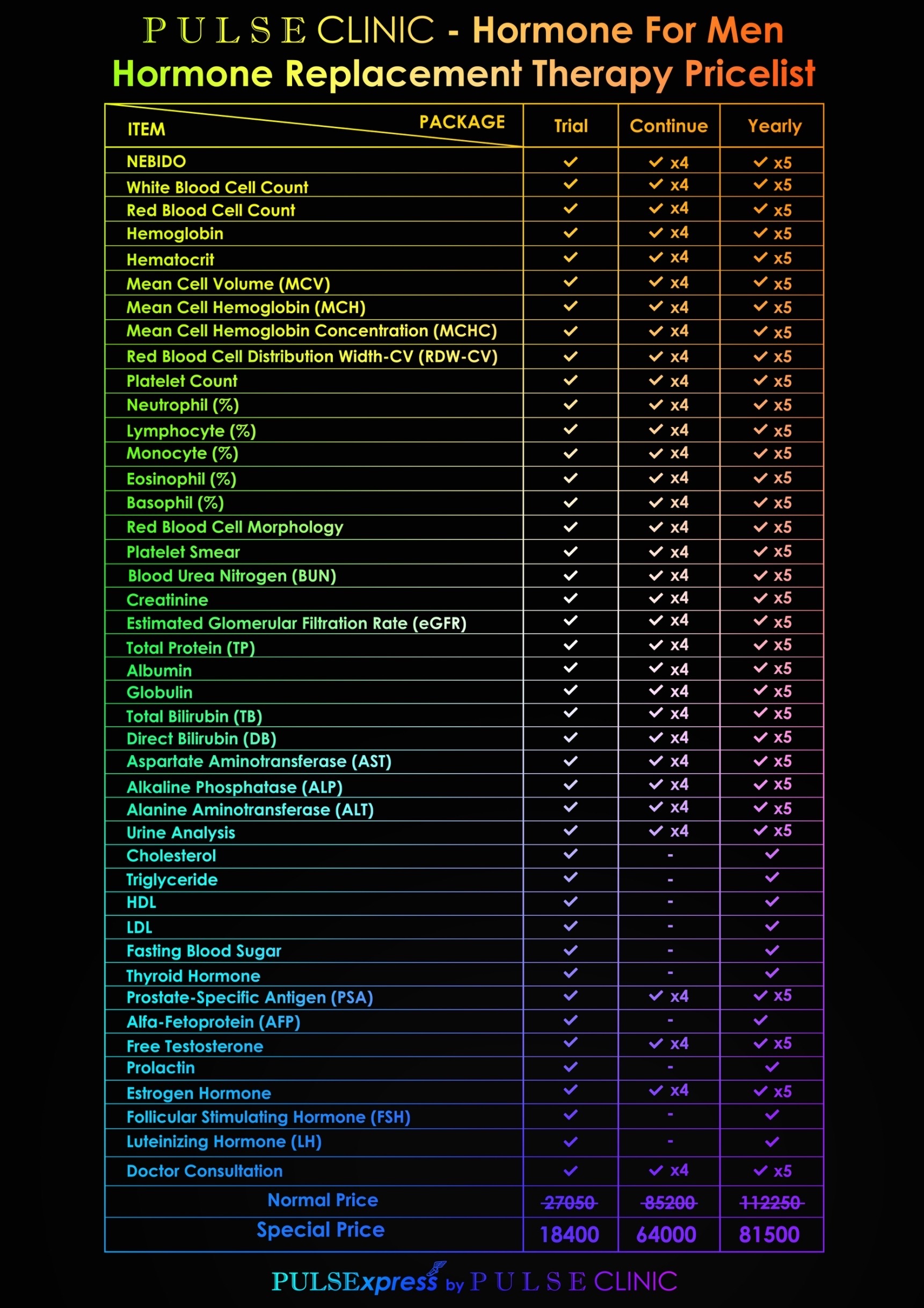
Testosterone Replacement Therapy (TRT) Price at PULSE Clinic
What Is Testosterone Replacement Therapy (TRT)?
Testosterone replacement therapy, or TRT, is a way to treat men with hypogonadism, which is low testosterone levels. Testosterone is a male sex hormone the testicles produce that plays a crucial role in male development and reproductive function. For example, it causes male traits like facial and pubic hair, a deep voice, and a lot of muscle mass to develop. However, low testosterone levels can lead to several problems, such as low sex drive, trouble getting an erection, feeling tired, and having less muscle mass.
TRT involves administering testosterone to the body through injections, patches, gels, or pellets. TRT aims to restore testosterone levels to a normal range and alleviate symptoms. However, TRT is not recommended for all men with low testosterone. It is usually only recommended for men with severe symptoms and low testosterone levels caused by a specific medical condition.

What is Testosterone?
How Does Testosterone Replacement Therapy (TRT) Work?
Testosterone Replacement Therapy (TRT) uses injections, patches, or gels to restore testosterone levels to normal, improving hormone balance effectively. By applying your prescribed medication as prescribed, the medication will help restore your testosterone level which can elevate your body functions. Testosterone replacement therapy is available in various forms, all designed to effectively increase testosterone levels. The most popular options are testosterone injections and testosterone gel. Which can be prescribed by one of our doctors at PULSE Clinic.
Are There Side Effects from Testosterone Replacement Therapy (TRT)?
TRT can cause acne, breast tenderness, sleep apnea, and blood clots, among other side effects. It may also increase the risk of prostate cancer and heart attacks. Therefore, before starting treatment, talking to a healthcare provider about TRT's possible risks and benefits is essential. Taking routine blood tests while being on TRT can also help reduce the risk of developing these symptoms as your blood work can let your doctor know if the medication is working for you.
Trusted by over 100,000 patients from more than 196 countries and regions, PULSE CLINIC provides discreet, professional healthcare with privacy and respect at every step. Here to Help. Not to Judge!
What are the Symptoms of Testosterone Deficiency?
Hypogonadism, which is another name for testosterone deficiency syndrome, is a condition that happens when the body doesn't make enough testosterone. Testosterone is essential for developing male reproductive tissues and secondary sexual characteristics. Testosterone deficiency syndrome symptoms can differ depending on how bad the condition is and how old the person is when it starts to show up.

Some common symptoms of the testosterone deficiency syndrome in men may include:
- Reduced sex drive: Testosterone is essential for maintaining libido, or sex drive. Men with low testosterone levels may experience a decrease in their desire for sexual activity.
- Erectile dysfunction: Testosterone plays a role in the development of erections. Men with low testosterone may have difficulty achieving or maintaining an erection.
- Decreased muscle mass: Testosterone helps to build and maintain muscle mass. Men with low testosterone may experience a decline in muscle mass.
- Increased body fat: Testosterone regulates metabolism and body fat distribution. Men with low testosterone may gain weight, particularly around the abdomen.
- Decreased bone density: Testosterone helps to maintain bone density. Men with low testosterone may be at increased risk for osteoporosis, a condition characterized by weak and brittle bones.
- Mood changes: Testosterone can affect mood. Men with low testosterone may experience mood changes, such as feeling more tired or depressed.
- Changes in cognitive function: Testosterone may affect cognitive function, such as memory and concentration. Men with low testosterone may experience changes in these areas.
It's important to note that other factors can also cause these symptoms, and it is essential to see a healthcare professional for a proper diagnosis and treatment.
What Causes Low Testosterone in Men?

Male Hormone Blood Test: Key to Diagnose for Testosterone Deficiency
A doctor will usually take a detailed medical history and perform a physical exam to determine whether someone has testosterone deficiency syndrome (TDS). They may also order blood tests to measure testosterone levels. A hormone blood test can help the doctor determine if the sex hormone levels in your body are normal. Identifying whether your male hormone level is too low or if you have an excess of female sex hormones (like estrogen) will help the doctor prescribe the correct medication personalized to your needs.
It is important to note that testosterone levels can vary throughout the day and can be affected by factors such as age, body weight, and certain medications. Because of this, the blood test may need to be done more than once to confirm a diagnosis of TDS.
In some cases, additional tests may be ordered to rule out other conditions that can cause similar symptoms, such as pituitary gland disorders, chronic illnesses, and certain medications. There are a few types of blood tests needed to measure your testosterone levels, such as:
- Total Testosterone Test: Measures all testosterone in your blood, including both protein-bound and free testosterone.
- Free Testosterone Test: Measures only the free testosterone in your blood, often used to diagnose specific conditions.
It's important to see a healthcare professional for a proper diagnosis and treatment of TDS. Treatment options may include testosterone replacement therapy and lifestyle changes, such as losing weight, exercising regularly, and eating a healthy diet. Treatment options for low testosterone can also be dangerous if not used correctly, so it's important that you're using the medications under the doctor's care. Contact a PULSE Clinic near you for more information about testosterone replacement therapy (TRT), and make an appointment today!
Test your testosterone levels easily with a simple blood test. Visit us today to check your testosterone! Don’t keep health concerns to yourself—take control of your well-being now.

Contact us at info.bkk@pulse-clinic.com or chat on your preferred platform:

How Can TRT Help with Low Testosterone
Testosterone replacement therapy (TRT) is a treatment option for men with testosterone deficiency syndrome (hypogonadism). TRT involves replacing the body's missing testosterone to help alleviate the symptoms of hypogonadism.
There are several different types of testosterone replacement therapy available in Thailand. These include:
- Oral testosterone medication is taken in the form of a pill, which is swallowed. However, oral testosterone is not commonly used because it can be harmful to the liver.
- Topical testosterone medication is applied to the skin in the form of a gel, patch, or cream. It is absorbed through the skin into the bloodstream. One of the most popular topical testosterone treatments is AndroGel.
- Injectable testosterone medication can be injected into the muscle or under the skin. Injections may be given every two to four weeks. There are many types of injectable testosterone, such as Nebido and testosterone cypionate.
It's important to note that testosterone replacement therapy is not appropriate for all men with testosterone deficiency syndrome. It is important to discuss the benefits and risks of TRT with a healthcare professional before starting treatment.
Running Low on Your Medication? PULSE Got You Covered!
Buying medicine online or get an online medication refill for your TRT medication with PULSE Clinic. For more information about the medication and ordering process, please contact us at pulseliving@pulse-clinic.com or chat with us on your preferred platform.
Frequently Asked Questions (FAQ) About Testosterone Replacement Therapy (TRT)
Consulting with your doctor to determine if testosterone therapy is right for you is important before starting TRT. Not all men with low testosterone need it. Here are some frequently asked questions about TRT.
TRT for Low Testosterone and Erectile Dysfunction (ED)
Low testosterone (low T) and erectile dysfunction (ED) are sometimes confused. While low T can reduce libido and contribute to ED, it’s possible to have ED with normal testosterone levels or no ED despite low T. Consulting a doctor can help ensure you receive the correct treatment, leading to better results.
Do I Need to be on Testosterone Replacement Therapy Forever?
If you stop TRT, the symptoms of low testosterone typically return, meaning you may need to continue the treatment for life—unless you choose to stop it. If you decided to stop your TRT, please consider using post-cycle therapy (PCT) to avoid long term side effects from stopping TRT.
Can Testosterone Replacement Therapy (TRT) Help with Muscle Growth?
Testosterone is crucial for men’s physical attributes, significantly impacting muscle building and overall fitness. While Testosterone Replacement Therapy (TRT) isn’t an instant fix for gaining muscle, it can help you increase muscle mass and optimize your workout results.
Testosterone boosts anabolic activity, resulting in bigger muscles, denser bones, and faster healing. Higher testosterone levels also contribute to increased skin thickness, promoting a strong and rugged physique.
Interestingly, studies show that men on testosterone therapy gained more muscle mass than those who trained with weights but did not use testosterone. Understanding these benefits can help you achieve your fitness goals and improve your overall health. Check out our bodybuilder health check up for information about health check up packages for people using testosterone for muscle growth.
How Long Does It Take for TRT to Work?
Some patients experience improvements within a few weeks, while others may take several months. The results vary depending on factors such as age, lifestyle, dosage, and overall health. Typical timelines for improvement include:
- Energy and mood: 2–6 weeks
- Libido improvements: 3–6 weeks
- Muscle mass changes: 8–12 weeks
- Body composition changes: 3–6 months
Is TRT safe?
TRT is generally safe when prescribed and monitored by a qualified medical provider. Regular follow-up appointments and blood tests are essential to ensure that the treatment remains safe and effective.
Can TRT Help with Weight Loss?
TRT can potentially help in fat reduction and improved body composition by boosting energy levels, motivation, and muscle mass. However, its effectiveness is maximized when combined with a balanced diet and regular exercise.
Does Testosterone Replacement Therapy (TRT) Impact Fertility?
TRT can decrease sperm production and potentially affect fertility. Men who intend to have children should consult their doctor before starting TRT to discuss fertility-preserving options.
Do I Need Blood Tests Before TRT?
Yes, blood testing is crucial before initiating TRT to assess testosterone levels and evaluate overall health markers. Follow-up blood tests are equally important throughout the treatment period.
What’s the Difference Between TRT and Anabolic Steroid Use?
TRT aims to restore testosterone levels to normal physiological levels under medical supervision, while anabolic steroid abuse often involves excessive doses without proper monitoring.
Can TRT Improve Mood and Mental Health?
Some men report improvements in mood, confidence, motivation, and mental clarity after correcting low testosterone levels. How often are TRT injections given? The frequency of injections depends on the medication prescribed. Some testosterone injections are given weekly, biweekly, or according to individualized treatment plans.
How Do I Know if TRT is Right for Me?
A medical consultation, symptom review, and laboratory testing are the best ways to determine whether TRT is appropriate for you.
More Information About Testosterone Replacement Therapy (TRT) from PULSE Clinic
Trusted by over 100,000 patients from more than 196 countries and regions, PULSE CLINIC provides discreet, professional healthcare with privacy and respect at every step. Here to Help. Not to Judge!